Recipes & Techniques · 4 min read
Cook Faster on Weeknights With Smart Mise en Place
July 30, 2026
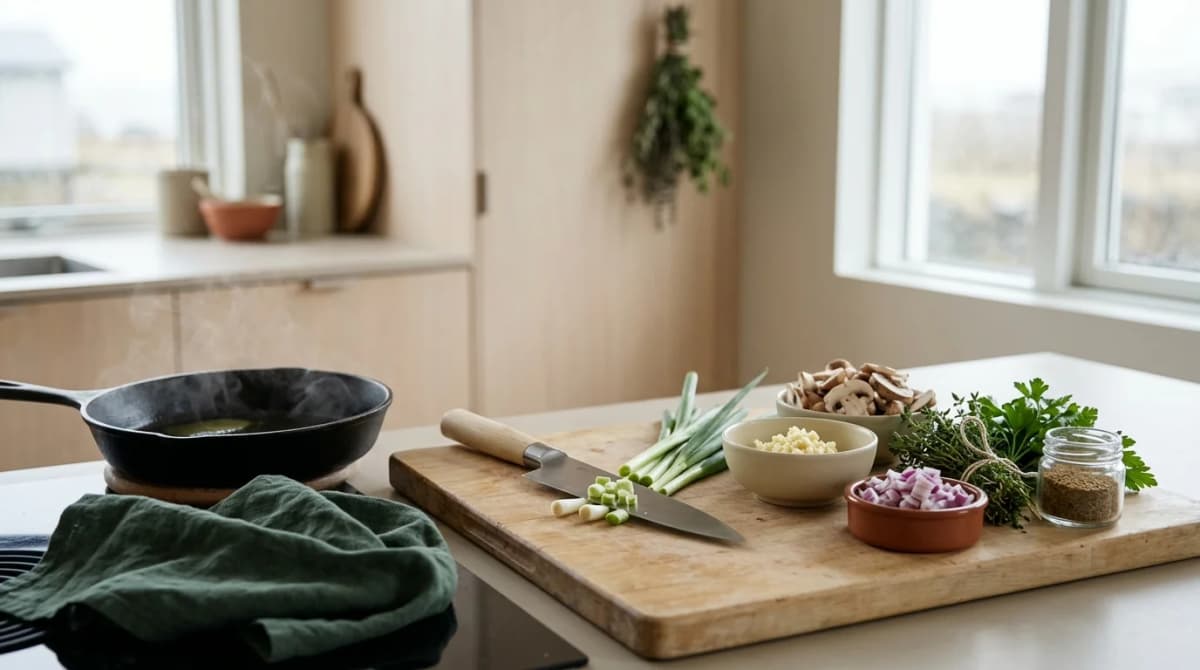
Why weeknight cooking feels slower than it should
Most of the time lost cooking on a weeknight isn't spent stirring or simmering — it's spent searching for the vegetable peeler, realizing an ingredient is missing, or chopping while a pan sits empty and heating for no reason. Cooking faster is less about knife skills and more about sequencing and setup.
Mise en place, without the fuss
Mise en place — "everything in its place" — has a reputation as a professional-kitchen ritual, but the home version is much simpler: read the recipe once, all the way through, before turning on any heat.
Read first, then prep
Knowing what's coming means you can group tasks logically instead of discovering, mid-recipe, that you needed diced onion five minutes ago. A quick read-through also catches marinating times, oven preheats, or resting periods that need to start early.
Prep everything that doesn't need heat
Chop vegetables, measure spices, mince garlic, and portion liquids before the pan goes on the stove. This front-loads the slow, precise work into a calm five minutes instead of scrambling while something is actively cooking and at risk of burning.
Cooking in parallel, not in sequence
The biggest speed gain in weeknight cooking comes from doing things at the same time instead of one after another.
- Start rice or pasta water boiling before you begin chopping — it takes longer to heat than most prep takes
- Preheat the oven the moment you decide what you're making, even if the dish won't go in for 15 minutes
- While a sauce simmers hands-off, use that window to prep a side or start cleaning as you go
- If a recipe has a resting or marinating step, use it to handle another task rather than standing and waiting
Setting up your kitchen to move faster
A few small habits in how the kitchen itself is organized save real time over a week of cooking:
- Keep the tools you use most (a sharp knife, a cutting board, measuring spoons) somewhere you don't have to search for them
- Store oils, salt, and frequently used spices near the stove rather than in a cabinet across the kitchen
- Clean as you go — rinsing a cutting board during a simmering step means less to face at the end
- Keep a small bowl on the counter for scraps, so you're not walking to the bin mid-chop
Building a short list of fast, reliable meals
Speed also comes from familiarity — a recipe you've made ten times takes less mental effort than a new one, even if the steps are identical on paper. Keeping a small rotation of meals you know well, saved to your , means you're not relearning a dish from scratch on a night when you're already short on time.
Planning ahead removes decisions, not just time
A surprising amount of weeknight slowness comes from deciding what to cook after you're already hungry and tired. Choosing meals for the week ahead of time — and matching the faster ones to the busier nights — means dinner starts with prep instead of a decision. A that accounts for which nights are tightest makes this concrete instead of aspirational.
A simple pre-cooking checklist
Before turning on any heat, a 90-second pass through this list catches most of what slows a weeknight dinner down:
- Have I read the whole recipe once?
- Is everything I need actually in the kitchen?
- What can I prep now, before the stove is on?
- What can happen in parallel instead of in sequence?
- Is the oven or a pot of water something I should start early?
FAQ
What's the single biggest time-saver for weeknight cooking?
Reading the full recipe before starting. It prevents the most common slowdown — discovering a step you weren't ready for while something is already cooking.
Do I need fancy equipment to cook faster?
No. A sharp knife and a stable cutting board make more difference than any gadget — dull knives are slower and less safe.
How can I speed up cooking without cutting corners on quality?
Focus on parallel tasks (boiling water while chopping, preheating early) rather than skipping steps. Speed comes from sequencing, not shortcuts.
Is meal planning actually faster than deciding day-to-day?
For most households, yes — it removes the daily decision entirely and lets you match quicker meals to busier nights in advance.